
No Grainger 72-Hour Release Feed
No verified official Grainger County list identifies everyone released during the past three days. The sheriff links a browser jail application with name, charge, and number-of-days controls. Its public interface does not state that the days field filters releases. Direct testing also found that current and purported released routes showed the same current-style fields and lacked any release date. Entering three days cannot turn the tool into a 72-hour release list.
The dependable alternative is a date-bounded request to the Grainger County Sheriff’s Department. Specify three calendar dates, not merely “recent releases.” Ask for existing movement or release entries that fall within that period, including time, type or authority, and destination when those fields are maintained and releasable. The detention facility can route the request at 865-828-3613. This method establishes a stable range even when online results change.
Check Grainger Three-Day Releases
Define the period before searching. A request for Friday through Sunday is clearer than “the weekend,” and a request with start and end dates is clearer than “the last 72 hours.” This matters because a rolling 72-hour clock and three calendar days do not always cover the same events. It also gives the custodian an exact record set to locate.
- Write down the three calendar dates and the Eastern Time start and end points relevant to the inquiry.
- Review the county jail interface for identity clues. Use full name, admit date, Name ID, charge, court type, and agency fields only to identify records.
- Call the detention facility and ask for the records custodian. Request release or movement entries within the defined dates.
- For a named person, match the jail event to the correct Circuit or General Sessions criminal docket and ask for the related order or disposition.
- Use VINE for future custody alerts. Search TDOC FOIL only where a Tennessee felony transfer, prison release, parole, or probation may apply.
Do not use the admit date as a proxy. It can identify a booking that began during the range, yet it says nothing about whether the person left. The Grainger County 24-hour release process is narrower when only the same date matters.
Grainger 72-Hour Release Fields
A true three-day release list would need a release timestamp and a custody outcome. Grainger’s tested public grid does not supply either. It offers booking facts that can help build a precise request. The difference between displayed and needed fields should stay clear.
| Field | Public status and meaning |
|---|---|
| Full name and Name ID | Useful for matching a person to a booking episode. |
| Age, race, sex, address | Identity details may appear in grid or person-detail records. |
| Admit date and time | Shows entry into custody. It is not a release timestamp. |
| Charge and court data | May include offense date, court type and date, bond data, and involved agencies. |
| Release date and time | Not verified on the public view; request the movement record. |
| Release type and destination | Not verified on the public view; needed to separate community release from transfer. |
The sheriff’s movement entry is the county source for physical custody. The court’s order supplies legal context. A bond amount on a booking page means a condition may have existed. It does not show that payment occurred or that another hold was cleared. Request the exact release authority or disposition code rather than asking staff to summarize an entire case.
Note: Grainger publishes no public retention period for the jail portal, so preserve the booking identifiers before the display changes.
Grainger Weekend Release Records
A three-day inquiry is most useful when a same-day check would split related events across office closures or calendar boundaries. Correctional activity continues while administrative offices are closed. That does not mean a public records counter operates around the clock, and Grainger County publishes no special weekend or holiday release procedure. No official source gives a fixed release hour, exit point, family waiting place, or processing timetable.
Ask for the actual movement timestamp rather than assuming the docket date equals the release date. A judge may enter an order before staff finish verification, bond processing, property work, or checks for another hold. Conversely, the court docket may update after the physical movement. The jail and clerk share the Justice Center, but their records remain separate. The sheriff documents custody movement; the clerk preserves the order and case disposition.
The Grainger County court docket page can help select the proper criminal division.
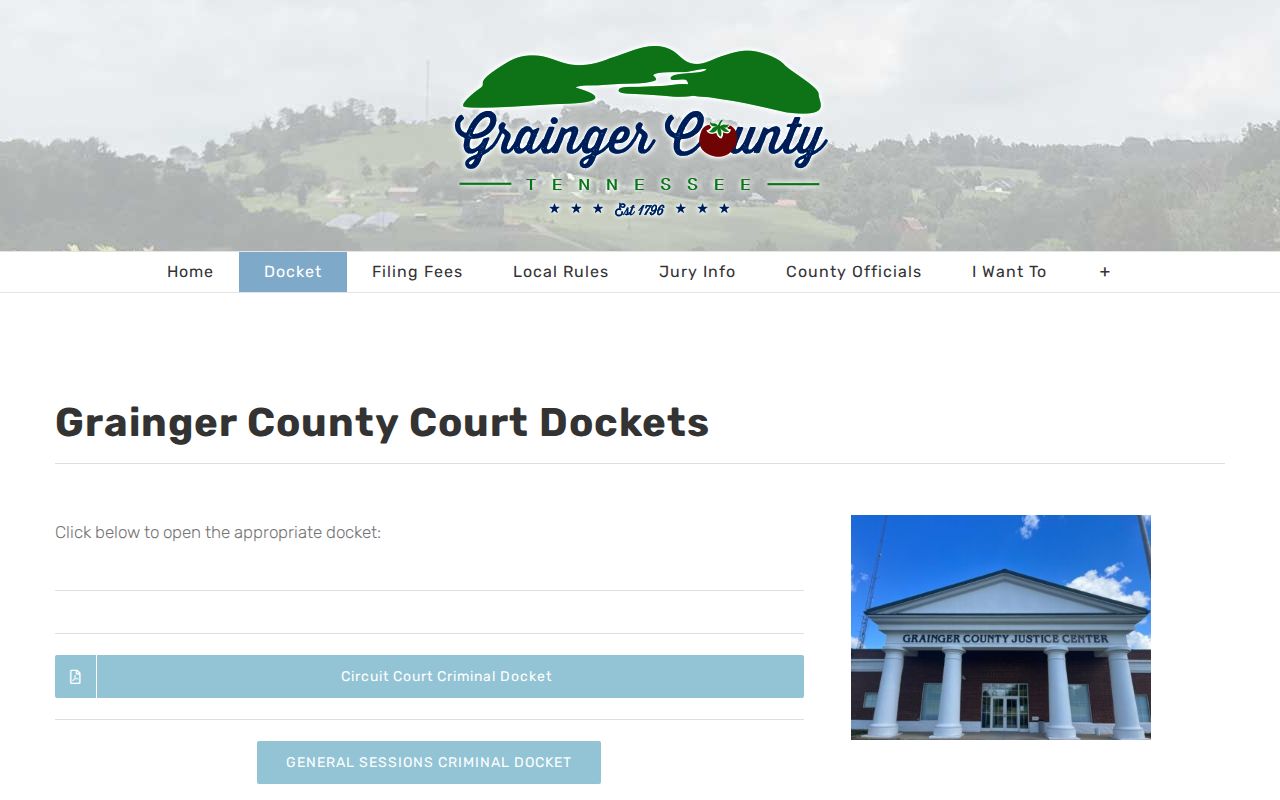
The docket view supplies court timing and division context. It should be paired with the release order and jail movement entry, not treated as proof of the door-opening time.
Grainger Released Routes Match Current
Grainger’s jail application contains code paths labeled for released records, including index-released and inmates-released. The label is not a functioning archive guarantee. During the source sweep, the current and purported released grids returned the same count and the same booking-style fields. Neither grid displayed a release date. The visible interface also offered no explained current-versus-released switch.
The purported released grid and the application’s route logic document the local software quirk. They do not document a 72-hour feed. The server publishes no timezone, refresh interval, or retention policy. A response header suggesting dynamic delivery still says nothing about the database update schedule. If the sheriff later adds a working toggle with distinct release rows and dates, the live source should be assessed again. Until then, a three-day list must come from records, not route guessing.
Monthly state jail reports are another potential source of confusion. The TDOC jail summary page provides population snapshots, not a list of people released during a weekend.
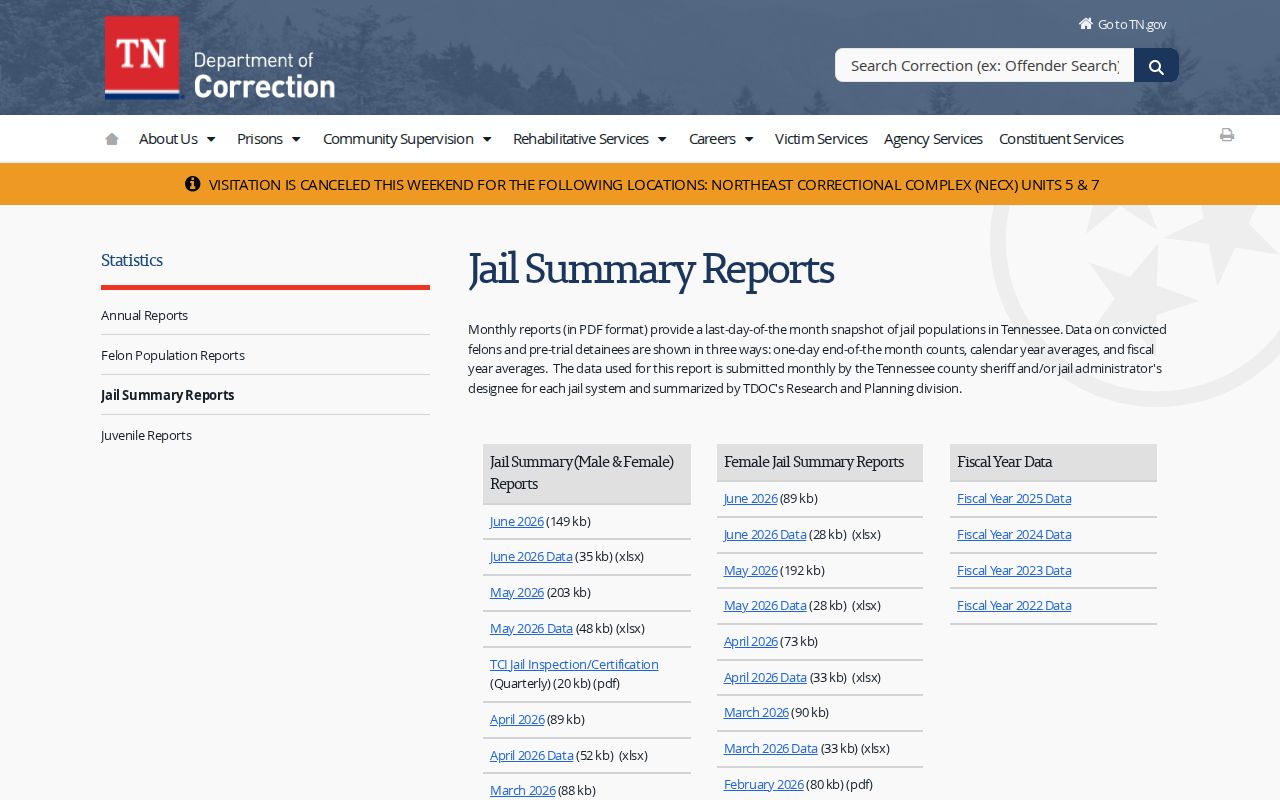
The statistical source can describe custody composition on a reporting date. It cannot identify individual Grainger County release movements across three days.
Request Grainger Three-Day Records
Address a recent request first to the sheriff at 270 Justice Center Drive, Suite 105, Rutledge, TN 37861. Administrative hours are Monday through Friday, 8:30 a.m. to 4:30 p.m. Call before mailing because current county sources conflict on the detention mailing box. Do not use the old county web result that points to Newport. It conflicts with the operating Grainger facility’s current official contact information.
A focused Tennessee Public Records Act request should name the date range, whether inspection or copies are sought, and the requested delivery method. For a list, seek existing release or movement entries across the three dates and request any maintained date, time, type, authority, booking identifier, and destination fields. For one person, add full name, date of birth if known, approximate admit date, and Name ID or booking number. Ask for redaction and the nonexempt remainder if protected information appears in the same record.
Grainger publishes no sheriff-specific release-record fee. Request a written estimate before copies are produced. Tennessee guidance generally allows the custodian, when prompt production is not possible, seven business days to produce, deny with a legal basis, or state the time reasonably required. That deadline governs the response path, not necessarily final production. For older permanent records, the sheriff may refer the request to Grainger County Archives.
Confirm Grainger Release Destinations
Every event in a three-day range needs a destination check. Community release may follow bond, dismissal, time served, sentence completion, a court order, or another lawful basis. A transfer ends the county booking while custody continues. TDOC FOIL is the right follow-up for a Tennessee felony commitment. It may show incarceration, parole, probation, inactive status, release information, location, offenses, and sentence fields. Someone held only on a county misdemeanor or pretrial booking may have no FOIL record.
VINELink can provide a prospective custody-event alert for the correctly matched Grainger or state record. The alert identifies an agency event, not the full legal reason. A transfer can require following the receiving record. Federal BOP and ICE locator tools are not substitutes for an ordinary Grainger booking search; they apply only when the custody path supports federal or immigration involvement.
| Record | Question it answers |
|---|---|
| Sheriff movement entry | When county custody ended and where the movement went, if recorded and releasable. |
| Court order or disposition | What legal authority affected the case. |
| TDOC FOIL record | Whether Tennessee felony custody or community supervision continues. |
| VINE event | What custody change the reporting agency sent to the notification network. |
For a person-specific search that extends beyond this three-day batch, consult the Grainger County released inmate records path. It compares county, state, court, notification, federal, and immigration channels without merging their meanings.