
Grainger County VINELink Coverage
VINE means Victim Information and Notification Everyday. Tennessee reaches the service through VINELink. The Grainger County Sheriff's official page links the Tennessee entry beside its inmate search, which is direct local evidence that VINELink is the intended notification channel. TDOC also participates in VINE for state custody. Coverage should still be checked on the matched record because reporting agencies, events, and retention can differ.
VINELink is not a certified release instrument. An explicit out-of-custody or release event can show that the reporting agency ended its episode. That event does not prove the person entered the community. A detainer may cause a transfer to another county, TDOC, federal custody, or immigration custody. Likewise, no search result can reflect spelling, timing, a different agency, or a record outside the service.
The Grainger jail’s own web portal does not provide a dependable historical release feed. Its purported released routes matched current-style data during the research sweep and did not display release time or reason. That makes VINELink especially useful for a future event, but it also makes source confirmation vital. A VINE alert can point to the date and reporting agency while the sheriff's movement record supplies the nonconfidential type and destination.
| Custody source | VINELink role | Best confirmation |
|---|---|---|
| Grainger County jail | Local custody event and alerts when reported | Sheriff movement or release entry |
| TDOC felony custody | State status and notification events | FOIL plus TDOC release record |
| Federal or USMS custody | Not covered as a BOP locator | BOP, federal court, or USMS |
| Immigration custody | Not an ICE locator | ICE ODLS and agency confirmation |
Search a Grainger Inmate on VINELink
Use the modern Tennessee VINELink search or follow the sheriff's link. Search results can contain similar names. Agency, facility, offender ID, and other displayed identifiers matter more than a name alone. Never combine details from two possible matches.
- Open Tennessee VINELink and choose the people, offender, or custody search shown by the live service.
- Enter the full name or offender ID. Try a careful spelling variant only when needed.
- Compare the reporting agency, facility, and available identifiers before opening a record.
- Read the status, event, and date exactly. For a claimed release, look for an explicit release or out-of-custody event.
- Save the event wording and reporting agency, then confirm the date, legal type, and destination with the responsible office.
The Grainger County released inmate lookup path separates a local jail release from TDOC, federal, and immigration custody when a notification suggests a handoff.
The image below is the official modern Tennessee VINE search captured for the Grainger County VINELink route.
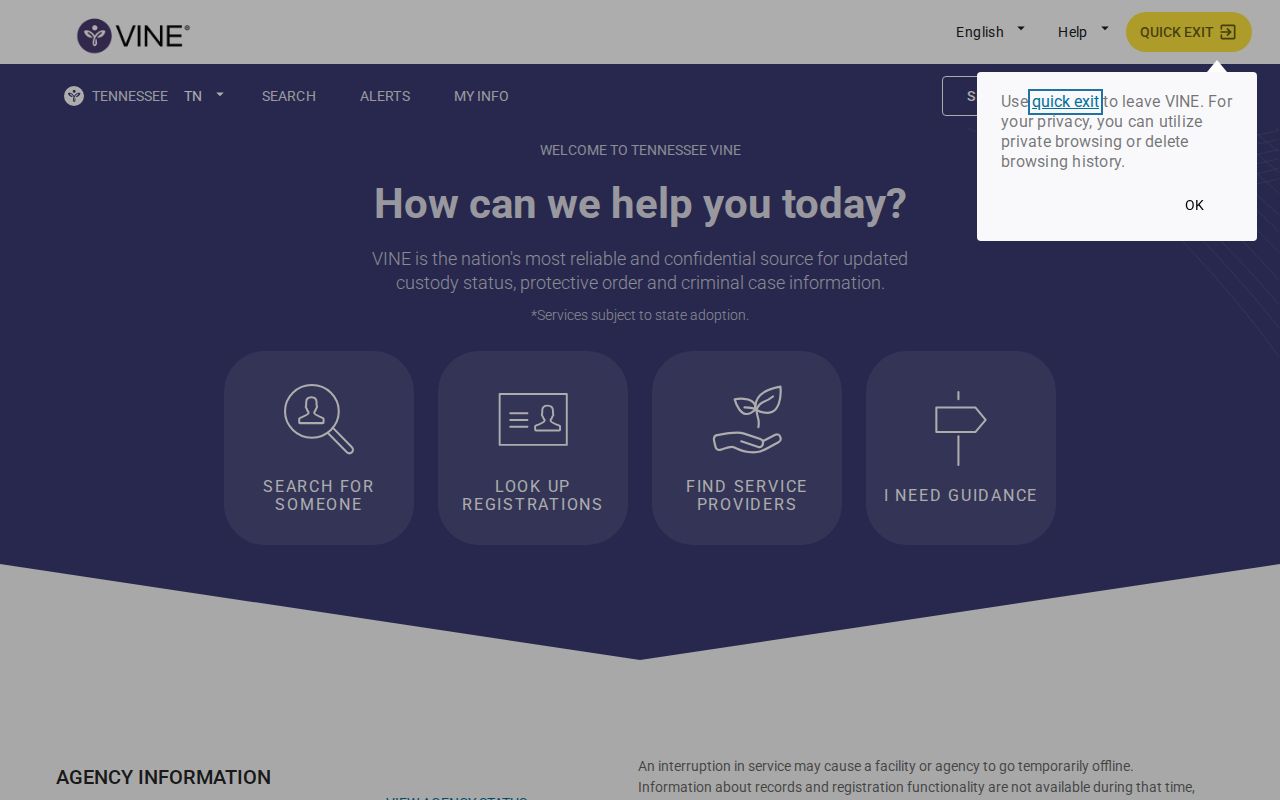
It shows the agency search entry point; a specific result still requires an identity match and source confirmation.
Grainger VINELink Release Fields
Fields vary by contributor and record. Read the live label rather than assuming every entry carries a release date or photograph. VINELink's chief value is a dated custody event tied to a reporting agency. It is weaker when the record is empty or the event wording is broad.
| Field or event | What it can establish |
|---|---|
| Name and offender ID | Identity clues for matching the correct record |
| Agency or facility | Which custodian reported the event |
| Custody status | The agency's current reported state |
| Event type and date | A release, transfer, or custody change when explicitly labeled |
| Notification control | Available registration options for that record |
A scheduled date, when displayed, is not the same as an actual release event. For a state prisoner, TDOC FOIL supplies the state status and sentence fields. For a Grainger jail booking, the sheriff's movement record gives exact physical release time and destination when the public portal does not.
FOIL status also helps interpret what happened after a local handoff. “Incarcerated” indicates continued state confinement. “Parole” or “Probation” generally reflects community supervision, and “Inactive” may reflect the end of active TDOC custody or supervision. Those terms do not cover every Grainger County case, and they should be checked against the date and sentence detail. A person held only on a local charge may have no FOIL record.
Register Grainger County Release Alerts
Registration begins from the correctly matched record. Tennessee describes VINE alerts as free and confidential, with phone, text, email, app, TTY, or accessibility choices offered as available. The live workflow controls. No reviewed Tennessee source establishes one fixed PIN length for every channel.
- Open the notification registration control on the matched record.
- Select one or more offered channels and enter the destination carefully.
- Complete the link, code, account step, or other confirmation displayed on screen.
- If a telephone flow requests a PIN, create a private PIN and use it to acknowledge later calls.
- Retain the registration confirmation and note which agency supplies the record.
Operator help is available at 888-868-4631 around the clock. A transfer can change the reporting record, so follow any instruction to register again for the receiving agency. Keep alerts current and remove old destinations that are no longer secure.
Notification delivery can depend on the contact channel and acknowledgment step. A phone call may ask for the private PIN created during registration. Text, email, or app notices may require a link, code, or account confirmation. Follow the live prompt rather than assuming an older workflow still applies. If no notice arrives, check the registration status and matched record before treating silence as evidence that custody continued.
Confirm Grainger VINELink Release Events
First identify the reporting agency. For Grainger County jail custody, call the Detention Facility at 865-828-3613 or request its movement entry with the release date, time, type, and destination. The jail's public detail does not publish those release fields. For TDOC custody, compare the VINE event with FOIL, the release authorization, and the listed institution or supervision office. A court order can explain bond, dismissal, sentence, or probation, but only the jail can state the physical movement time.
BOP's locator is the correct channel for a federal sentenced person. A recent USMS detainee may require the federal docket or district contact because not every pretrial placement appears in BOP. ICE's locator serves immigration custody. None of those systems is a substitute for the ordinary Grainger booking record.
Registry searches also have a narrower role. The TBI registry may show an incarcerated person, so presence there is not proof of community release. Grainger County court dockets can identify the controlling case and order, but an online hearing schedule does not prove an order was entered or carried out. A complete check keeps VINE, the custodian, and the legal record in their separate roles.
Note: Record the alert time, event text, and reporting agency before calling, since a later screen may reflect a newer custody event.
Grainger SAVIN Detainer Notifications
Grainger County's notification path has a distinctive local and state link. The sheriff sends readers to Tennessee VINELink, while TDOC later joined VINE and retained written notification duties. TDOC Policy 511.03 distinguishes release to the community from release by detainer. When a person is handed to another Tennessee county facility, the policy directs continued tracking through SAVIN/VINE.
That rule explains why one release alert can mark a handoff. The first jail has ended custody, but the person may remain confined elsewhere. Follow the agency and destination shown, search the receiving record if instructed, and seek the movement document. A notification is an event lead. It is not the full legal reason for the transfer.
TDOC's written notice can include the type of release, release date, sentence-expiration date, and intended residence city and state. Those fields offer more context than a brief alert, but access depends on the proper agency record and any confidentiality limits. For a parole event, a Board recommendation still must be followed by plan approval, a certificate, and actual custody exit.
The manifest image below comes from the Tennessee Board public-records route, a documented channel for nonconfidential parole decision material when a custody event depends on Board action.
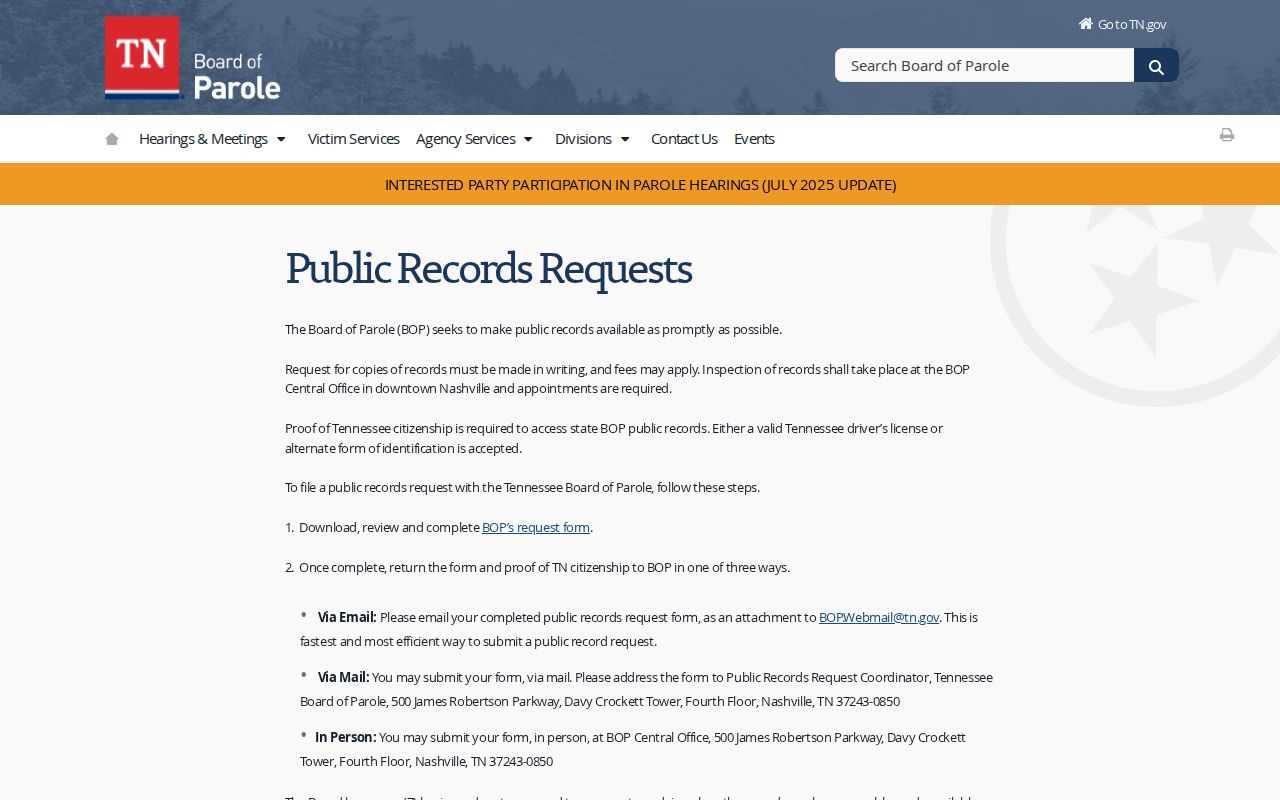
It illustrates the records fallback needed when a VINELink event does not explain the legal basis for release.
Grainger Custody Alerts Versus Registries
The TBI Sex Offender Registry is not a VINELink replacement. It covers only people who must register under specific laws, and it can include incarcerated people. A registry result therefore does not establish that someone was released. Its address, status, registration date, and registering agency may corroborate a separate community record, but the actual custody event still comes from the jail, FOIL, VINE, or a court record.
Tennessee also maintains offense-specific drug and persistent domestic violence registries. Those sources remain narrow continuing records. They should never be read as general Grainger County release lists. Use the exact registry status and its source caveat, then return to the agency that held the person for release proof.
A dated registry update can help distinguish two people with similar names, but it remains supporting evidence only. Compare the registering agency and identifiers without assuming that an address or photograph is current beyond the registry's stated update. For most released Grainger County people, no offense-specific registry entry should exist at all. The absence of one has no bearing on the jail or TDOC release record.